

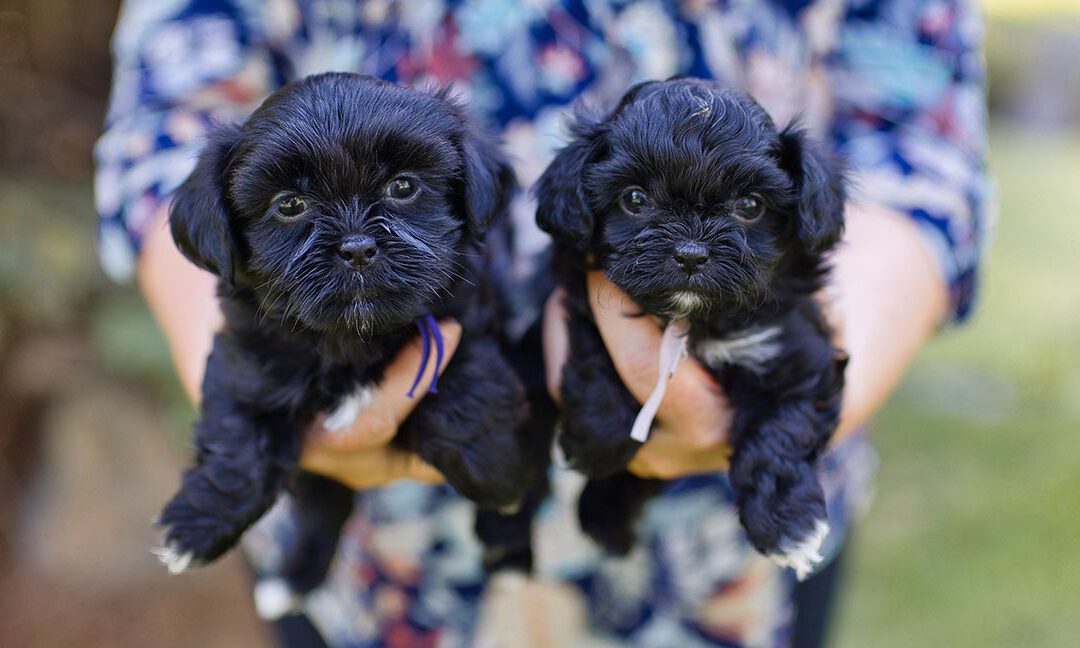
Yes, you can legally train your own service dog for Down syndrome under the Americans with Disabilities Act, and at Habibi Bears, this is the path we guide most of our families through. Owner training is often confused with cutting corners, but for many families it actually means more control over the process, not less, and it means your Familiar is shaped by your home and your child from the very first days of the sacred imprint window rather than by strangers in a training facility.
If you have been researching how to train your own service dog for Down syndrome, you have probably run into a lot of conflicting information online. Some of it comes from organizations that only place fully trained dogs and have an incentive to make it sound harder than it actually is to train your own service dog for Down syndrome. This guide walks through what is actually legal, what the timeline looks like, and what tends to trip families up along the way.
Can You Legally Train Your Own Service Dog?
Yes. Under the ADA, there is no requirement that a service dog be trained by a professional program or organization. The Department of Justice’s own guidance on service animals confirms that a dog only needs to be individually trained to perform tasks related to a person’s disability, and the training itself can come from the handler, a family member, or a private trainer.
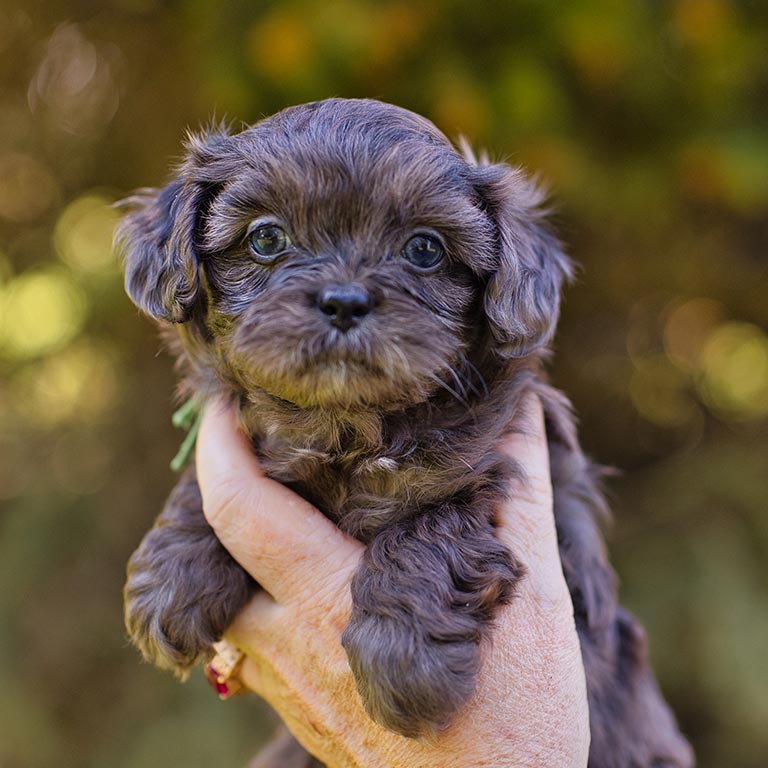
This is exactly why owner-trained service dog Down syndrome programs have become such a common path for families who want to train their own service dog for Down syndrome without a multi-year wait. There is no federal registry, no certification requirement, and no mandated number of training hours written into the law. What matters legally is the outcome: a dog that reliably performs specific, disability-related tasks and behaves appropriately in public. That is the entire legal bar, and it is one that a dedicated family, especially one who begins the process early with the right foundation, can absolutely meet.
At Habibi Bears, we build that foundation before your Familiar ever leaves our care. Our puppy curriculum begins the groundwork needed to train your own service dog for Down syndrome during the earliest weeks of life, which means families starting their own service dog training Down syndrome journey are not starting from zero.
How Long Does Training Take?
Most families training their own service dog for Down syndrome should expect somewhere between one and two years of active, structured work before the dog is fully public-access ready, though basic household support tasks often develop much sooner. If your goal is to train your own service dog for Down syndrome successfully, treat this as a realistic, multi-phase timeline rather than a race.
The International Association of Assistance Dog Partners publishes minimum training standards that many owner trainers use as a benchmark, and their guidance reflects a similar timeline to what we see in Habibi families. Training generally happens in phases.
Foundation Phase (Birth to 6 Months)
This is where socialization, nervous system regulation, and early exposure matter most. A puppy raised through the Habibi Blueprint socialization curriculum enters this phase with a real head start, since the imprint window cannot be recreated once it has passed.
Skill Building Phase (6 to 12 Months)
Specific task training begins here, layered on top of the foundational bond and communication already established. This is also when families start practicing the difference between developmental milestones at home and the calm, focused behavior public spaces require.
Public Access Phase (12 to 24 Months)
The dog generalizes trained skills to unpredictable, real-world environments: stores, schools, appointments. This phase takes the longest because reliability under distraction cannot be rushed.
DIY service dog training moves at different speeds for different teams, and a dog that started life with intentional early handling generally progresses faster through each of these phases than one whose training only begins at adoption age.
What Skills Are Required?
Families who want to train their own service dog for Down syndrome need to build three overlapping skill sets: task-specific training tied to your child’s actual needs, general public-access manners, and the kind of two-way communication that lets the dog and child understand each other.

Task-Specific Skills
These depend entirely on the individual. Common examples include interrupting unsafe behaviors, providing deep pressure therapy foundations during moments of overwhelm, or alerting a caregiver to specific sounds. The task must connect directly to a real, identifiable need, not a general sense of comfort.
Public Access Skills
The dog needs to remain calm and unobtrusive in stores, waiting rooms, and classrooms. This includes settling quietly for extended periods, ignoring food and other dogs, and recovering quickly from sudden noise or movement.
Communication Skills
This is the piece owner training programs online often skip entirely. In our own program, we teach children to read their dog’s Sacred Signals, the small shifts in posture, breathing, or body language that tell you what the dog needs before it becomes a bigger problem. A service dog for Down syndrome only works well long-term when this communication runs in both directions.
Is Professional Support Necessary?
Professional support is not legally required to train your own service dog for Down syndrome, but most families benefit from some outside guidance, especially for public-access skills and troubleshooting specific behavioral setbacks.
This does not mean handing the entire process over to an outside trainer. It means having support available when you need it. At Habibi Bears, our Familiar Activation Protocols begin with us and continue at home, so families who train their own service dog for Down syndrome are never doing it entirely alone, but they are also never asked to outsource the relationship-building work that only happens between a child and their own dog. Our FAQ page covers many of the specific questions families ask us during this stage.
What Are Common Mistakes?
The most common mistake in service dog training families make is rushing public access before the foundational bond and basic reliability are actually solid.
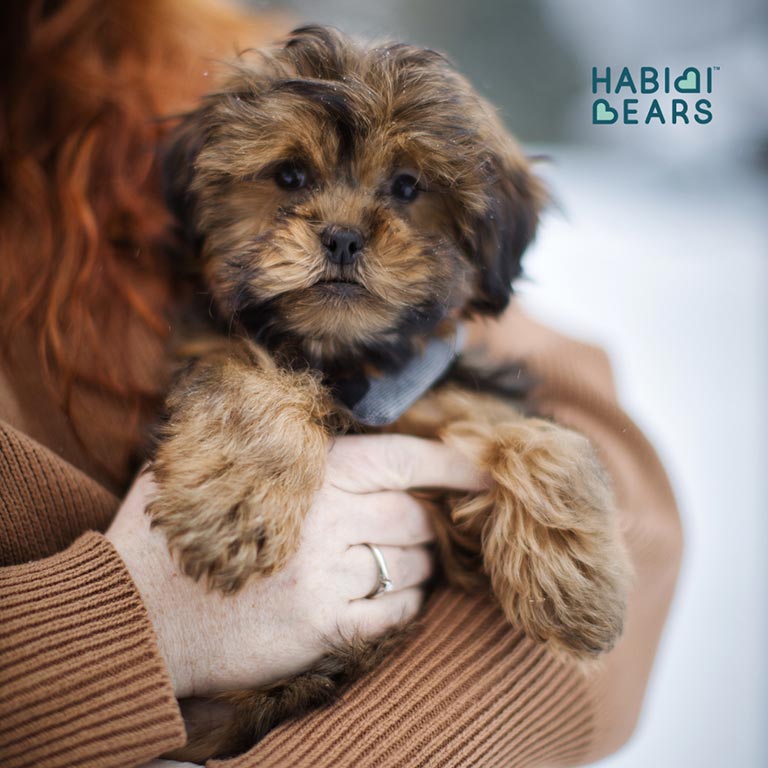
Skipping the Early Bonding Window
Families who adopt an older dog and try to retrofit service work onto it often struggle, because the imprint window has already closed. This is one reason we start the process in our own nursery rather than waiting until placement.
Undertraining Public Access Behavior
Task training gets the attention, but a dog that cannot settle quietly in a waiting room will struggle in public regardless of how well it performs its actual tasks. This is one of the fastest ways an owner-trained service dog Down syndrome team loses public-access reliability.
Treating It as a One-Way Relationship
DIY service dog training that focuses only on what the dog does for the child, without teaching the child to read the dog in return, tends to break down under stress. Co-regulation has to run both directions to hold up over time.
Underestimating the Timeline
Expecting a fully public-access-ready dog in a few months sets families up for frustration. The ADI standards that IAADP references reflect a realistic, months-to-years timeline, not a shortcut.
How Habibi Bears Supports Owner Training
We are not a service dog organization with a multi-year waitlist and a price tag that runs into the tens of thousands of dollars for a fully finished dog. We are a purpose breeder that raises Familiars specifically so families can train their own service dog for Down syndrome themselves, without missing the one developmental window that cannot be recreated later. By the time your Familiar comes home, the bond has already begun, and we have been building it with your family in mind since day one. You can learn more about how we evaluate each puppy, explore our core methodology for a full picture of the Habibi Method Philosophy, or read about our socialization curriculum that lays the groundwork for every Familiar we place.
Frequently Asked Questions
Can you legally train your own service dog?
Yes. The ADA does not require professional certification to train your own service dog for Down syndrome, only that the dog performs specific, disability-related tasks reliably in public.
How long does training take?
Most teams need one to two years of structured work, moving through foundation, skill-building, and public access phases.
What skills are required?
A service dog needs task-specific training, public access manners, and two-way communication between the dog and the child.
Is professional help necessary?
It is not legally required, but occasional outside guidance helps most families, especially for public access troubleshooting.
What are common mistakes?
Rushing public access, skipping early bonding, undertraining public behavior, and treating the relationship as one-way are the most common setbacks.