

What do autism service dogs do? It is one of the first questions families ask when they begin exploring this path, and it is exactly the right place to start. Because the answer is not just a list of tasks, it is a window into an entirely different way of moving through the world, for a child who has always experienced it more intensely than the people around them realized, and for a family that has spent years searching for something that actually helps.
At Habibi Bears, this question sits at the heart of everything we do. We did not breed the Habibi to be a well-behaved dog. We bred the Habibi to be a Familiar, a partner whose entire developmental foundation was built around the nervous system of a neurodivergent child. Understanding what autism service dogs do is the first step toward understanding why the bond we build during the imprint window changes everything.
What Do Autism Service Dogs Do? The Foundation
Before getting into specific tasks, it helps to understand what makes an autism service dog different from a pet, an emotional support animal, or even a traditionally trained service dog.
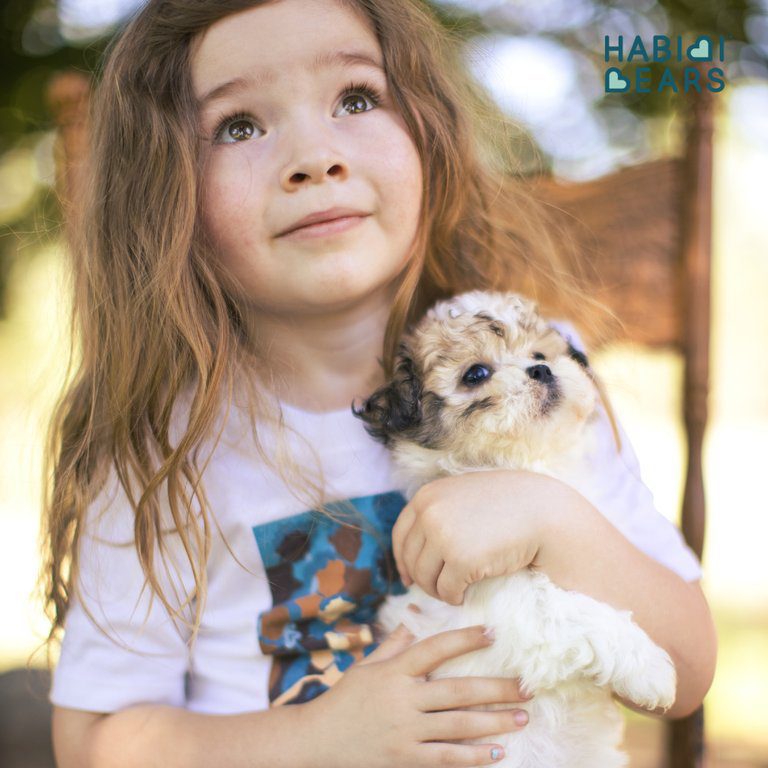
An autism service dog, properly prepared and bonded, does not just respond to cues. They attune. They read the emotional landscape of their child in real time, picking up on the subtle shifts in body language, breathing, and behavior that signal a change in their child’s internal state. This capacity for attunement, what we call reading Sacred Signals, is not something that can be trained into a dog at six months or a year. It is built during the imprint window, in the earliest weeks of life, when the nervous system is most open to shaping.
A dog raised with this foundation arrives ready not just to perform tasks but to be genuinely present with a child in the way that matters most.
Autism Service Dog Tasks: What They Are Trained to Do
Under ADA guidelines, a service dog must be trained to perform at least one specific task that directly mitigates the effects of a disability. For autism, the range of tasks is broad and deeply personal, shaped around the specific needs of the individual child. Here is a detailed look at what autism service dogs do in practice.
Deep Pressure Therapy
Deep pressure therapy is one of the most widely used and deeply effective tasks an autism service dog can provide. During moments of anxiety, overstimulation, or emotional dysregulation, the dog applies calm, steady physical pressure to the child’s body, typically by lying across the lap, leaning against the legs, or resting their head on the child’s chest.
The neurological effect of this pressure is well documented. It activates the parasympathetic nervous system, slowing the heart rate, reducing cortisol levels, and creating a physiological sense of safety that no verbal reassurance can fully replicate. For children who struggle to self-regulate, a dog trained in deep pressure therapy becomes one of the most reliable co-regulation tools they have access to.
This is also one of the reasons physical suitability matters so much in breed selection. A dog needs sufficient size and body weight to apply meaningful pressure, and they need nervous system stability to remain calm and grounded while their child is in distress.
Interrupting Repetitive or Self-Stimulatory Behaviors
Many children on the autism spectrum engage in repetitive behaviors, sometimes called stimming, that can range from harmless self-soothing to behaviors that risk physical harm. An autism service dog can be guided to gently interrupt these behaviors by nudging, pawing, or making physical contact with the child to redirect their attention.
The keyword here is gently. This is not a correction. It is a connection. The dog’s intervention creates a moment of contact that breaks the loop without shaming, startling, or escalating the child’s distress. Over time, children often come to see their dog’s presence as an anchor that naturally reduces the intensity and frequency of these behaviors.
Alerting to Emotional Escalation
What do autism service dogs do before a meltdown happens? For many families, this is the task that most profoundly changes daily life.

A well-attuned Familiar learns to recognize the early physiological signals of emotional escalation in their child, the changes in breathing, body tension, scent, and movement that precede a full meltdown, often before the child or their caregivers are aware of what is coming. The dog alerts by nudging, pawing, making eye contact, or seeking out a caregiver, giving the family a window of time to intervene, de-escalate, or move the child to a safer environment before the situation reaches its peak.
This task is not programmed. It grows out of the Familiar Bond, the deep attunement that develops between a dog and a child who have grown and learned together from the beginning. It is one of the most profound expressions of what the imprint window makes possible.
Supporting Children Through Meltdowns
Even with the best preparation and the most attuned Familiar, meltdowns happen. They are not failures. They are a neurological reality for many children on the spectrum, and having a dog who knows how to be present during one is one of the greatest gifts a family can have.
During a meltdown, an autism service dog provides a consistent, non-reactive physical presence. They do not startle. They do not withdraw. They do not add to the noise and confusion of the moment. They stay and offer the grounding physical contact that helps a child’s nervous system return to regulation faster than it would on its own.
For siblings, parents, and caregivers who have felt helpless during these moments, watching a dog remain calm and present with a child in distress is often described as one of the most moving experiences of their lives.
Elopement Prevention and Safety Tethering
Wandering, or elopement, is one of the most serious safety concerns for families raising children with autism. Children who elope are at significant risk of injury, traffic incidents, and becoming lost. The speed with which it can happen leaves many families in a constant state of hypervigilance that is exhausting and unsustainable.
An autism service dog trained in tethering works as a physical anchor. A specialized belt-and-leash system connects the child and dog, and the dog is guided to stop, sit, or plant when the child moves toward a boundary or attempts to run. The dog’s size and trained response create a gentle, consistent interruption that keeps the child safe without restraint or confrontation.
Beyond formal tethering, a deeply bonded Familiar also provides passive safety. Children who are emotionally anchored to their dog are less likely to elope in the first place, because the bond itself creates a reason to stay close.
Guiding Away from Overwhelming Environments
Public spaces, grocery stores, crowded events, and busy school hallways can be deeply overwhelming for neurodivergent children. The sensory input is intense, unpredictable, and often impossible to manage without support.
An autism service dog can be trained to guide its child away from an overwhelming environment and toward a quieter space, a caregiver, or a predetermined safe location. This task gives the child an active partner in navigating the world rather than leaving them to manage overstimulation alone.
Creating a Social Buffer in Public
One of the quieter but deeply meaningful things autism service dogs do is create a natural social buffer in public spaces. The dog’s presence draws attention in a way that gives the child and family control over social interactions. People who might otherwise approach directly will often engage through the dog first, which gives the child time to prepare, opt in, or opt out of the interaction entirely.
For children who find unexpected social contact difficult, this buffer can reduce anxiety in public significantly and make community participation more accessible over time.
Building Social Confidence and Communication
What do autism service dogs do for a child’s social development? More than many families expect. Research consistently shows that children with autism demonstrate increased social engagement, eye contact, and communication when a dog is present. The dog becomes a bridge, a shared point of interest that opens conversations that might not otherwise happen.
Over time, caring for a Familiar also builds a child’s capacity for empathy, responsibility, and emotional communication. Learning to read their dog’s Sacred Signals, to understand what the dog is feeling and what they need, develops the same skills that support human relationships. The dog teaches in a language that feels safe and natural in a way that structured social skills programs often cannot replicate.
Providing Nighttime Support and Grounding
Sleep difficulties are extraordinarily common among children with autism, and the anxiety that surrounds bedtime and the night hours can be relentless for families. An autism service dog trained for nighttime support sleeps with or near the child, providing a steady, warm physical presence that helps regulate the nervous system and reduces the hypervigilance that often prevents restful sleep.
Some dogs are also trained to wake a caregiver if the child leaves their bed at night, adding an extra layer of safety for families managing elopement concerns around the clock.
Real-Life Examples of What Autism Service Dogs Do
Knowing the task list is one thing. Understanding what these tasks look like in the reality of a family’s daily life is another matter. Here are some of the ways families describe the difference their Familiar has made.
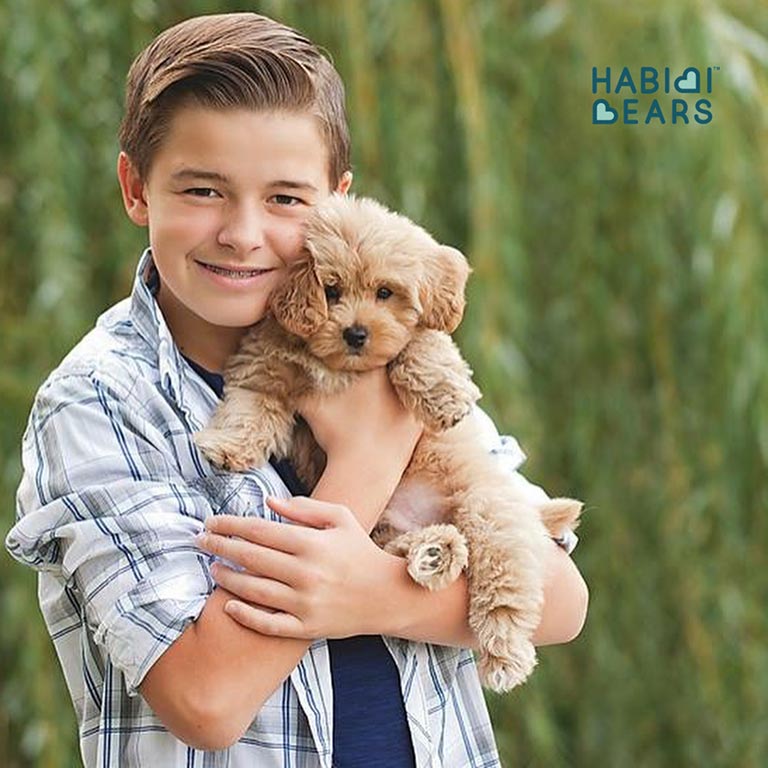
A mother describes her seven-year-old dropping to the floor in the middle of a grocery store, overwhelmed and beginning to escalate. Before she could reach him, his Familiar had already moved in, pressing gently against his side. By the time she knelt, his breathing had slowed. They finished the shopping trip.
A father talks about the morning routine that used to take two hours of negotiation and tears. His daughter now wakes up, greets her Familiar, and moves through getting dressed and eating breakfast with a steadiness that feels like a different child. The dog did not fix anything. The dog made it safe enough for her to manage.
A family describes their son’s first week at a new school. He walked in, holding his tether and his Familiar at his side, and sat down in his classroom for the first time without a transition meltdown. His teacher said she had never seen anything like it.
These are not extraordinary outcomes. They are what the Familiar Bond makes possible when a dog has been raised with intention from the very first days of life.
The Biggest Benefits of Autism Service Dogs for Families
What do autism service dogs do for the family as a whole? The impact extends far beyond the child.
Parents report significant reductions in their own anxiety and hypervigilance when their child has a trained Familiar. The constant monitoring, the bracing for the next meltdown, the fear around elopement, these do not disappear, but they soften in a way that allows families to breathe again.
Siblings benefit from a calmer household and from watching their brother or sister find an uncomplicated, joyful connection. The dog becomes a shared family member whose presence shifts the emotional temperature of the whole home.
Families report being able to participate in community life in ways that felt impossible before. Restaurants, events, holidays, travel, these things become accessible again when a child has a reliable co-regulation partner at their side.
And perhaps most profoundly, children gain a sense of agency. They are not being managed or accommodated. They are partnered. That shift from being supported to being understood is one of the deepest gifts the Familiar Bond offers.
Why the Imprint Window Is What Makes All of This Possible
We come back to this again and again because it is the foundation of everything. What do autism service dogs do at their highest level? They co-regulate. They attune. They stay present in the hardest moments without flinching. And that capacity is not installed through task training at six months. It is built in the imprint window, in the earliest weeks of life, when the nervous system is most open, and the Familiar Bond is first taking root.
Every Habibi dog begins this journey before they ever come home. The Familiar Activation Protocols, the nervous system foundations, the Sacred Signals work, all of it starts with us, so that by the time your Habibi walks through your door, the bond has already begun. We have been building it with them since day one.
If you are wondering whether this path is right for your family, we would love to talk. Reach out to us, and we will walk alongside you from the very first conversation, because that is what stewardship looks like, and it is what your family deserves.

Frequently Asked Questions
What do autism service dogs do for children during a meltdown?
They provide calm physical pressure and a steady, non-reactive presence that help the child’s nervous system regulate and recover more quickly.
Can autism service dogs prevent wandering and elopement?
Yes. Through tethering and the Familiar Bond, they provide both physical interruption and emotional anchoring that significantly reduces elopement risk.
Do autism service dogs help with social skills?
Yes. Children show increased engagement and communication when their dog is present, and learning to read their dog builds empathy that carries into human relationships.
What tasks can an autism service dog perform?
Tasks include deep pressure therapy, interrupting repetitive behaviors, meltdown support, elopement prevention, emotional escalation alerts, and nighttime grounding.
What are the biggest benefits of autism service dogs for families?
Families report reduced anxiety, a calmer home, greater community access, and a profound shift in their child’s sense of connection and agency.
Why does the imprint window matter for autism service dogs?
It is when the nervous system is most open to shaping. What is built during those early weeks cannot be fully recreated later.
Areas We Serve
Habibi Bears proudly supports families seeking autism service dog guidance throughout Washington, Oregon, Idaho, California, Montana, and Arizona. We regularly work with families in Seattle, Spokane, Tacoma, Bellevue, Portland, Salem, Eugene, Boise, Meridian, Coeur d’Alene, Los Angeles, San Diego, San Francisco, Phoenix, Scottsdale, Tucson, Billings, Missoula, Bozeman, and surrounding communities.
Whether you are researching the benefits of autism service dogs, exploring task-trained support options, or learning how a canine companion can help your child thrive, we are committed to helping families find the right path forward. Through education, guidance, and our relationship-focused approach, we help families better understand the life-changing role a well-matched companion can play in supporting neurodivergent children.