

Scatter Feeding for Dogs: A Simple Way to Calm and Reset Your Companion
If you have never completed any of our courses, you might not be aware that simple things, like being alone for an extra long period of time, an unfamiliar delivery person banging on the door, or even a squirrel running in front of the two of you on a walk together, can push your dog into a state of overstimulation, making it hard for them to calm back down. Being overstimulated, or what we call over threshold, can make it difficult for your dog to function normally, listen to you, or sometimes even sleep well, leading to upsetting the entire household.
If this sounds familiar or your dog has had a rough day and just needs to really unwind and reset, we have an easy thing to get your dog back to a neutral state of mind for you to try at home.
Whenever we see a dog who is struggling, we use scatter feeding to help them regain a sense of calm and provide them with mental stimulation necessary to help their brain get the signal to relax and take it easy. Let’s go over how and why scatter feeding tickles the fancy of your pup and makes you look like you just hung the moon!

The Sniff & Settle Routine
First, let’s take a moment to understand what we’re really doing here, because within the Habibi Method, this isn’t just scatter feeding — this is what we call Sniff + Settle, a gentle way to support your dog’s nervous system in returning to balance.
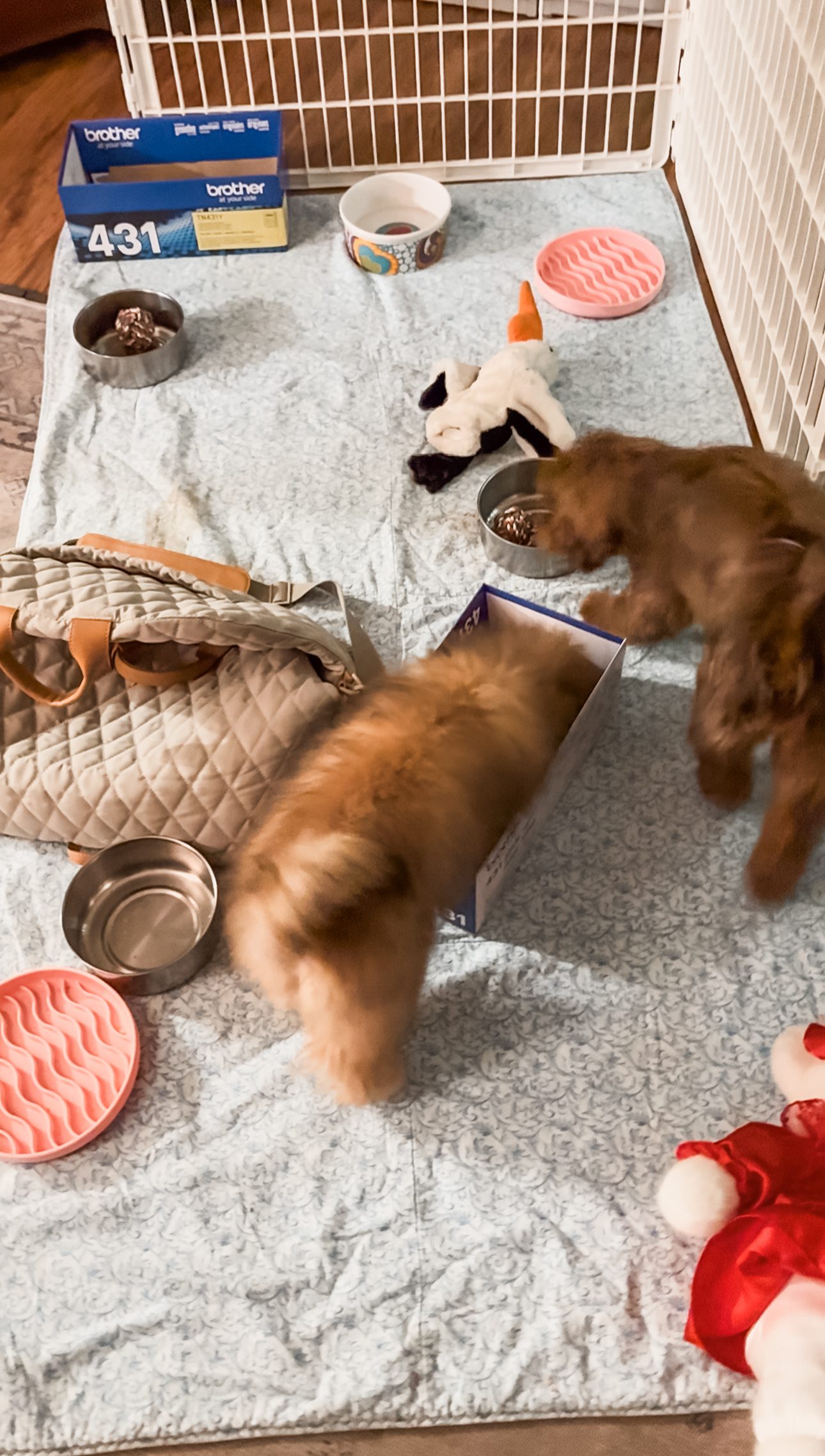
At its simplest, Sniff + Settle looks like a small handful of food — tiny, micro bite-sized pieces of treats or kibble — softly scattered across the ground for your dog to find using their sense of smell. You can also create a simple search area using a few household items like boxes or bowls, allowing your dog to explore on and around them as they look for each piece. As they begin to find the treats, their brain receives a small reward each time, reinforcing a sense of curiosity and engagement. Over time, as your dog becomes more confident, you can gently expand the routine, adding a bit more complexity to keep their mind engaged in a way that still feels calm and supportive.
The intention here isn’t to distract them from their day, but to guide them back into their body. Instead of staying activated or holding onto the energy of what just happened, your dog is given an opportunity to shift into something natural and instinctive — foraging, searching, following scent. It becomes a quiet, grounding experience where their focus gently moves away from overstimulation and into something that feels familiar and regulating.
Your puppy’s sense of smell is actually the very first sense to develop after birth. Before they can see clearly, before they fully hear, they are guided by scent to find their mother, to find nourishment, and to find safety. This is their original language. As they grow, that ability becomes incredibly sophisticated. Dogs have between 125 to 300 million olfactory receptors, allowing them to interpret the world through what we might think of as a “scent landscape,” rich with layers of information that we, as humans, simply don’t perceive. And it’s not just their nose doing the work. The vomeronasal organ, located along the roof of their mouth, allows them to detect pheromones, giving them insight into other animals — even understanding things like gender, health, and emotional state. It’s an extraordinary system, and when we engage it, we’re meeting them in the way they were designed to experience the world.
So when you scatter food and invite your dog to search, it’s not just fun — although it absolutely is that too. You, their favorite person, are right there with them, and now you’ve added food into the experience, which makes it even more meaningful. Beyond that, they are exploring the environment, picking up on scents, and moving through space with curiosity. It’s almost as if they are reading the story of what has happened there while also enjoying the reward of each small find. You could think of it as a shared experience — something social, something engaging, and something deeply satisfying all at once, whether in homes from Seattle to Spokane Valley, Portland to Meridian, or San Diego to Scottsdale etc.
What’s most important, though, is what happens internally. As your dog begins to sniff and forage, their body starts to shift. Dopamine is released — a neurotransmitter associated with pleasure, calm, and regulation. Their heart rate begins to slow, their breathing deepens, and their nervous system starts to come down from that heightened state. This is where the “settle” truly happens. And when you are there with them, calmly sharing that space, perhaps offering soft acknowledgment as they find each piece, it becomes more than just a reset. It becomes a moment of connection. They begin to associate you, and your presence, with that sense of calm and safety.
So the next time you notice your dog having a hard time settling, or you know their day has been full, stimulating, or just a little too much, you can offer Sniff + Settle. Take a few moments to prepare some small pieces of food, scatter them in a quiet space — your yard, a calm corner, wherever feels right — and simply allow them to move through it. There is nothing you need to force, nothing you need to correct. You’re simply guiding them back to something their body already knows how to do.
It’s a simple practice, but one that can completely shift the tone of a moment — and over time, the rhythm of your home. Sometimes the most meaningful support we can offer doesn’t come from doing more, but from returning to what has always been there.
Snuggle Up to Your New Adventure
Connect with Us Today!