

The Calm Puppy Routine That Changes Everything
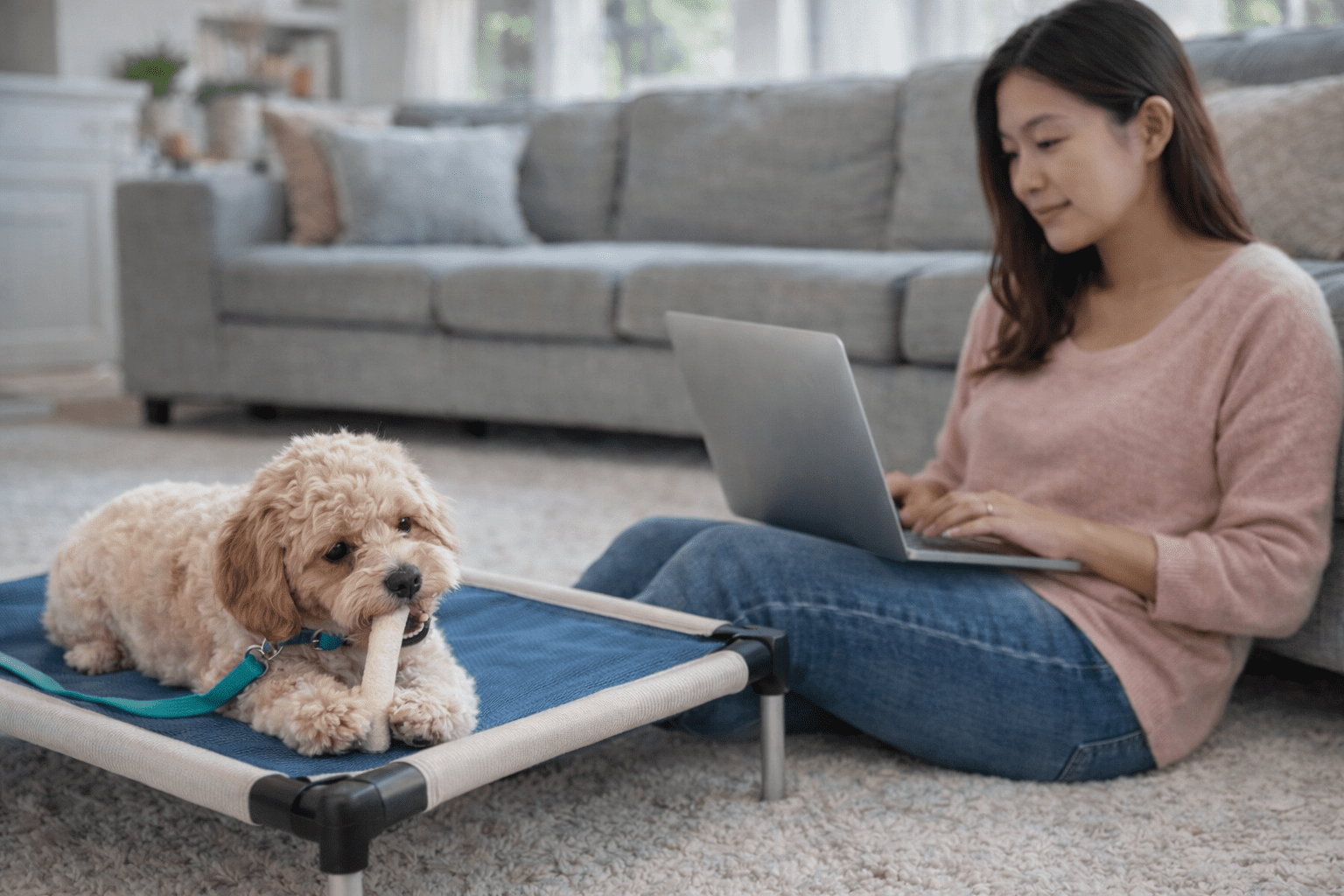
A calm puppy routine has the power to change not only a dog’s behavior, but the entire emotional atmosphere of a home—whether that home is in Seattle, Spokane, Tacoma, Portland, Boise, Los Angeles, or Phoenix.
Many modern families assume that calmness comes from training commands or from simply waiting for a puppy to “grow out of” difficult phases. In reality, calmness develops through predictable rhythm, gentle structure, and the feeling of safety within the environment, something that applies to households across Washington, Oregon, Idaho, California, Montana, and Arizona.
Recently, I witnessed the profound difference a calm puppy routine can make while caring for two adolescent dogs living just houses apart, a situation I have seen repeated in communities from Bellevue and Eugene to Meridian and Scottsdale. At first glance they appeared nearly identical — both female Golden Retrievers, both deeply loved, and both living in stable homes. Yet their ability to settle, sleep, and regulate their nervous systems could not have been more different.
Their story illustrates how the calm puppy routine truly changes everything.
How a Calm Puppy Routine Created Two Completely Different Dogs
When we look closely at Gracie and Millie, we are not simply observing two different personalities.
We are witnessing the long-term impact of whether or not a calm puppy routine was established early in life.
Gracie’s family created a predictable daily rhythm that supported her developing nervous system.
She learned where to rest.
She learned when activity would happen.
She learned that she did not need to monitor every movement within the household.
Because of this calm puppy routine, Gracie developed the ability to self-soothe.
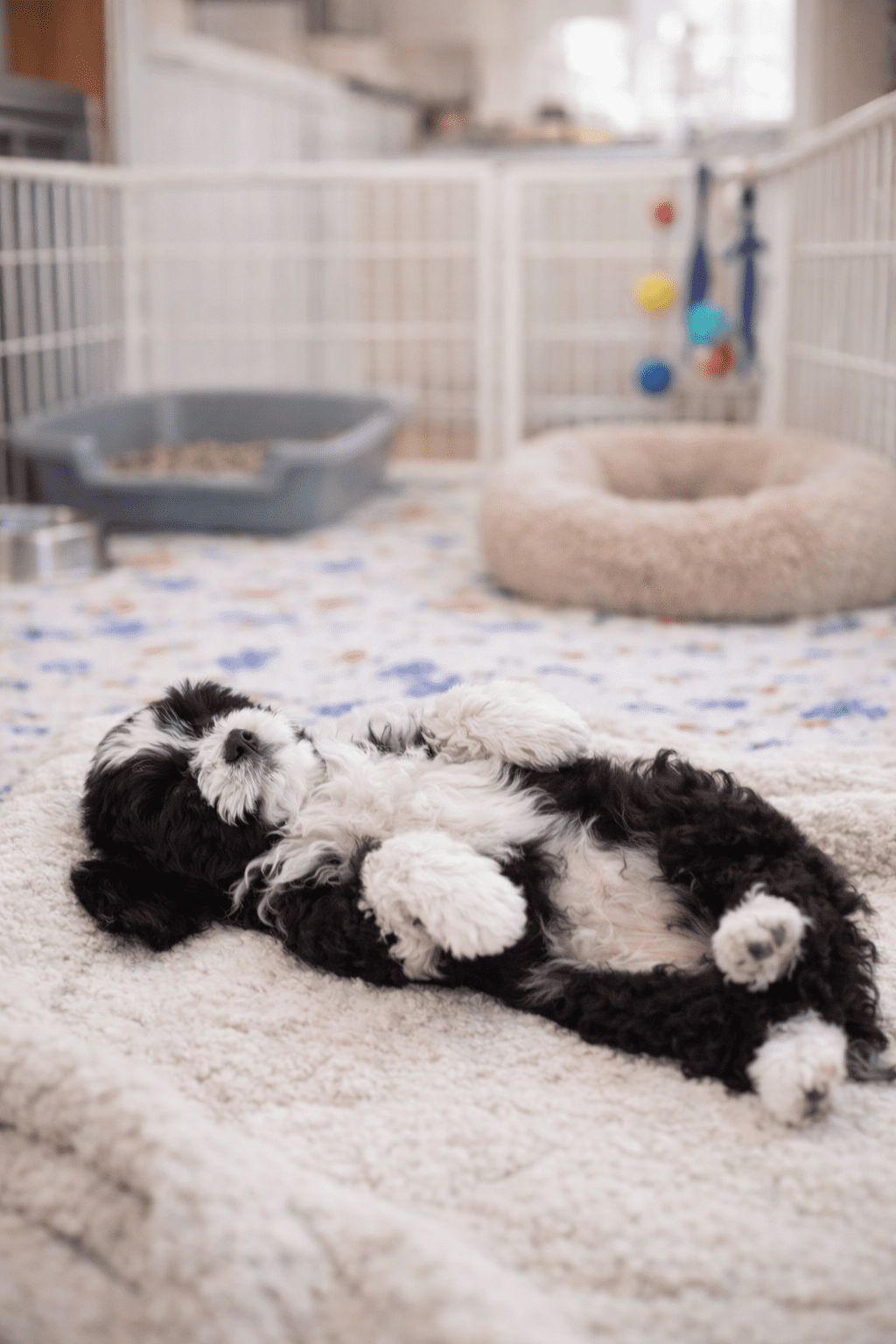
Her pen became a place of safety rather than confinement.
Her feeding times, walks, naps, and bedtime followed a gentle structure that helped her body understand when it was time to engage and when it was time to power down, no matter if that routine was happening in Bellevue, Eugene, Meridian, San Diego, or Scottsdale.
Over time, this consistency shaped her emotional resilience.
She did not need to jump, mouth, or demand constant stimulation because her nervous system had already learned that life unfolds in a predictable and supportive rhythm, something that benefits puppies and families across Washington, Oregon, Idaho, California, Montana, and Arizona.
Millie’s experience was very different.
Without a calm puppy routine, she was given full responsibility for navigating her environment.
Free access to the home meant her nervous system remained in a subtle state of alertness, constantly scanning for what might happen next.
Irregular rest patterns prevented deep restoration.
Unstructured freedom unintentionally communicated that she needed to manage the household herself.
As a result, behaviors that appear energetic or playful on the surface are actually signs of chronic dysregulation.
Her jumping, mouthing, inability to settle, and disrupted sleep are not signs of stubbornness or dominance.
They are signals that her nervous system has never fully learned how to feel safe enough to relax in her forever home.
This is why a calm puppy routine changes everything.
When a puppy is guided through consistent daily rhythms, gentle boundaries, and intentional rest opportunities, the brain and body begin to organize around safety rather than vigilance.
Calmness becomes a learned state.
Trust deepens.
The relationship between puppy and family becomes cooperative rather than chaotic.
Gracie did not become easy by accident.
She became easy because her early environment taught her how to live peacefully within the human world.
Snuggle Up to Your New Adventure
Connect with Us Today!
Why the Calm Puppy Routine Matters More Than You Think
The story of Gracie and Millie is not simply about behavior.
It is about nervous system development, emotional safety, and the long-term impact of how we guide our puppies during their earliest months.
A calm puppy routine is not about control.
It is about creating a rhythm that allows a young dog to relax into partnership with their human family.
When structure feels safe rather than restrictive, puppies learn how to regulate their own energy, settle into rest, and move through daily life with confidence.
Without this foundation, many puppies unintentionally carry the burden of managing their environment alone.
They become hyper-alert, overstimulated, and unable to fully relax — not because they are “difficult,” but because their nervous system never received the guidance it needed to feel secure.
The beautiful truth is that this pattern can be changed.
When families shift their focus from correcting behaviors to creating calm rhythms, everything begins to transform.
Sleep improves.
Connection deepens.
Daily life becomes more peaceful for both puppy and human.
This is the heart of the Habibi philosophy.
We guide development through relationship, observation, and intentional structure so that calm becomes a natural state rather than something constantly managed.
If you are preparing to welcome a puppy — or already navigating challenges — learning how to implement a calm puppy routine can change the entire trajectory of your journey together.
👉 Learn more about the Habibi Method and how we guide families in raising emotionally balanced companion dogs.